


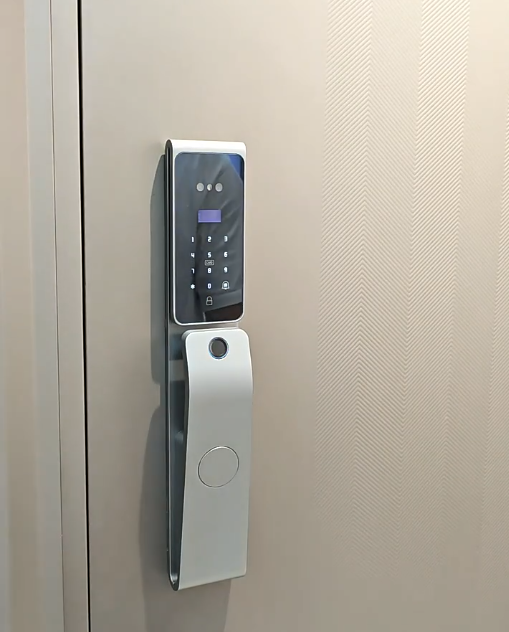
The smart door lock cylinder is one of those parts most people never think about — until they’re buying a lock and the word keeps appearing. The cylinder is central to how a lock works and how secure it is, and understanding it helps you choose well and avoid weak points. This guide explains what a smart door lock cylinder is, how it works, how smart locks change the picture, and what to check. If you’re shopping now, you can see complete units on our smart door lock range.
Whether you’re replacing a cylinder or buying a whole new lock, knowing this component makes you a far better-informed buyer.

What is a lock cylinder?
In a traditional lock, the cylinder is the part a key goes into — the barrel containing the pins or wafers that the right key aligns to turn the mechanism and move the bolt. It’s the heart of a key-based lock, and also its most attacked point, through techniques like picking, bumping, drilling or snapping. The cylinder’s quality largely determines how resistant a traditional lock is to these attacks.
The cylinder in a smart door lock
A smart door lock changes the role of the cylinder. Because entry is primarily by fingerprint, face, PIN, card or app, the cylinder is no longer used for everyday access. Many smart locks retain a concealed mechanical cylinder as an emergency backup — hidden behind a cover — so you can still open the door with a physical key if ever needed. Others integrate the cylinder differently, but the principle is the same: it’s a backup, not the main way in.
Why the cylinder still matters
Even as a backup, the cylinder matters because it can be a weak point if it’s poor quality. A cheap, exposed cylinder is vulnerable to picking or snapping, potentially bypassing all the clever biometrics. The best smart locks either conceal the cylinder, use a high-security cylinder resistant to these attacks, or both. When assessing a lock’s security, don’t overlook the humble cylinder — it can undo everything else if neglected.
Euro cylinders and standards
Many locks use a standardised “Euro cylinder” format, which makes replacement easy but also means low-grade versions are common. High-security cylinders add anti-snap, anti-pick, anti-drill and anti-bump protection. If your smart lock uses a replaceable cylinder, upgrading to a high-security one strengthens the backup path. For locks with a concealed, integrated cylinder, this is handled by design — another reason build quality and thoughtful engineering matter.
How Covlor approaches the cylinder and bolts
Covlor locks keep a concealed mechanical key as an emergency backup while making biometrics and codes the everyday method. Crucially, the bolts themselves are driven by a motor, not by turning a cylinder or handle. Covlor locks drive every bolt in and out with an all-metal gear motor rather than a rotating handle, which lasts roughly twice as long as plastic-geared motors. This motor-driven, multi-bolt design means security doesn’t rest on a single exposed cylinder, and the mechanical cylinder stays hidden purely as a fallback. Explore the models on our smart door lock shop.
Cylinder types at a glance
The table below compares how the cylinder works across common lock types, so you can see where a smart lock’s approach differs and why it’s more secure.
| Lock type | Role of the cylinder | Everyday access | Main security risk |
|---|---|---|---|
| Traditional key lock | Primary — key turns it to move the bolt | Metal key | Picking, bumping, drilling, snapping |
| Basic smart lock | Backup key, often exposed | Fingerprint / PIN / card | Weak exposed cylinder can be attacked |
| Quality smart lock (e.g. Covlor) | Concealed emergency backup only | Face, palm, fingerprint, PIN, card, app | Minimal — bolts are motor-driven, cylinder hidden |
Cylinder security vs whole-lock security
It’s a mistake to judge a lock by its cylinder alone. Real security comes from the whole package: a multi-bolt body that resists forcing, anti-tamper hardware, a concealed or high-security cylinder, and strong biometrics with anti-spoofing. A great cylinder on a flimsy body is as pointless as a weak cylinder on a strong one. Look at how all these elements work together, not just one part. Our biometric door lock guide covers the biometric side.
Replacing a smart lock cylinder
If your smart lock uses a standard replaceable cylinder and you want to upgrade or replace it, the process is usually straightforward: measure the existing cylinder’s size, buy a matching high-security unit, remove the retaining screw, and swap it. On locks with integrated or concealed cylinders, replacement is handled by the manufacturer’s design and rarely needed. Always confirm the format before buying a replacement so it fits your lock and door correctly.
What to check when buying
When assessing a smart door lock cylinder, ask: is the mechanical cylinder concealed or protected against picking and snapping? Are the bolts driven by a durable motor rather than a vulnerable handle turn? Is the body multi-bolt and anti-tamper? And is there a high-quality backup key path you’ll rarely need but can rely on? Satisfy these and the cylinder becomes a strength, not a weakness, in your lock’s overall security.
Cylinder myths worth clearing up
A few misconceptions surround the cylinder. The first is that a smart lock has no cylinder at all — in fact most keep a concealed one as an emergency backup, which is a good thing. The second is that the cylinder is where all a smart lock’s security lives — it isn’t; in a quality motor-driven lock, security rests on the multi-bolt body and motor, with the cylinder merely a fallback. The third is that any Euro cylinder is as good as another — they vary enormously, and only high-security versions resist snapping, picking and drilling. The fourth is that a concealed cylinder is less secure because it’s “hidden”; in reality, concealing it removes an easy target. Clearing up these myths helps you focus on what actually protects your door: the whole lock working together, with the cylinder playing its small, well-protected supporting role.
Looking after the cylinder
A cylinder asks little maintenance, but a few habits keep the backup path dependable. Keep the concealed keyway clean and free of dust so the mechanical key turns smoothly if ever needed, and test the backup key occasionally rather than discovering a problem in an emergency. Store that key somewhere safe but accessible, not inside the locked home. If you ever notice the key sticking or grinding, have the cylinder checked. Because you’ll rarely use it day to day, this five-minute occasional check is all the cylinder needs to remain a reliable last-resort way in.
The bottom line
The smart door lock cylinder may be a background part in a biometric lock, but it still matters as the emergency backup and a potential weak point if poorly made. The best smart locks conceal or strengthen the cylinder, drive their bolts with a durable motor rather than a vulnerable handle turn, and build security into the whole lock — body, bolts, biometrics and backup together. Judge the cylinder as part of that bigger picture, and you’ll choose a lock that’s secure through and through.
Frequently asked questions
What is a smart door lock cylinder?
It’s the barrel component that, in a traditional lock, a key turns to move the bolt. In a smart lock, everyday entry is by fingerprint, face, PIN, card or app, so the cylinder usually serves only as a concealed emergency backup for a mechanical key.
Does a smart door lock still have a cylinder?
Most do — as a concealed mechanical backup hidden behind a cover, so you can open the door with a physical key in an emergency. Everyday access is by biometrics and codes. Covlor locks keep a concealed key backup while driving the bolts with a motor.
Is the cylinder a security weak point?
It can be if it’s cheap and exposed, as it may be picked or snapped to bypass the biometrics. The best smart locks conceal the cylinder or use a high-security one, and drive the bolts with a motor rather than a vulnerable handle turn, so security doesn’t rest on the cylinder alone.
Can I replace a smart door lock cylinder?
If your lock uses a standard replaceable cylinder, yes — measure the existing size, buy a matching high-security unit, and swap it. Locks with concealed or integrated cylinders handle this by design and rarely need it. Always confirm the format fits your lock first.
Is a concealed cylinder more or less secure?
More secure. Concealing the mechanical cylinder behind a cover removes an easy target for picking or snapping, while everyday entry happens through biometrics and codes. Combined with motor-driven bolts, this means your lock’s security never rests on an exposed cylinder.
Explore the range: see current models, features and prices on the Covlor smart door locks shop, or message us on WhatsApp +91 8860055551 for help choosing the right lock for your door.

