


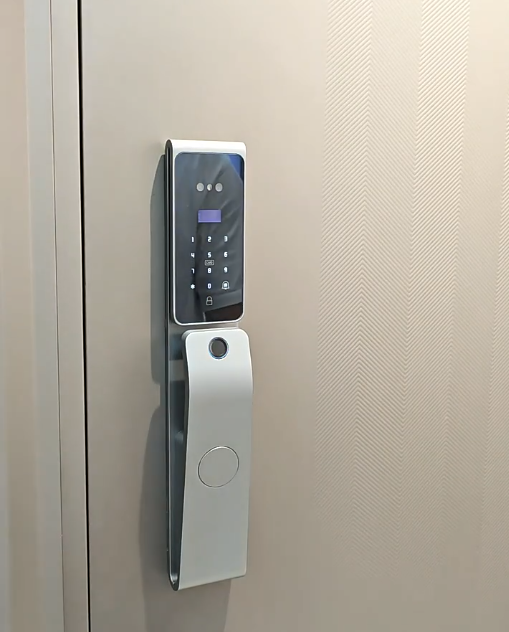
If you’ve shopped for premium smart locks, you’ll have seen the term “electric mortise smart door lock” — often highlighted as a sign of a serious, secure lock. But what does it actually mean, and does it matter for your home? This guide explains what an electric mortise is, how it works, why it’s considered strong, and how to choose a lock that uses one.
Understanding the mechanism behind the lock helps you judge real security rather than just counting features on a spec sheet.

What is a mortise lock?
A mortise lock is one whose body sits inside a pocket (the “mortise”) cut into the edge of the door, rather than mounted on the surface. Mortise locks have long been the standard for secure doors because the lock body is enclosed within the door, making it stronger and harder to attack than a surface-mounted rim lock. Most quality main-door locks in India are mortise locks.
| Aspect | Mortise | Rim |
|---|---|---|
| Fitting | Set into the door edge | Mounted on the surface |
| Strength | Stronger, multi-bolt | Lighter duty |
| Best for | Main doors | Lighter internal doors |
What makes it “electric”?
An electric mortise smart door lock adds a motor to the mortise mechanism, so the bolts are driven electronically when you unlock with a fingerprint, face, PIN, card or app. Instead of manually turning a knob, the motor throws or retracts the bolts automatically. This is what turns a traditional mortise lock into a smart one, combining the strength of a mortise body with the convenience of keyless, motorised operation.
Why an electric mortise is strong
The security advantage comes from the mortise body and its multiple bolts. A good electric mortise engages several locking points — typically a main deadbolt plus additional bolts — that extend deep into the frame, making the door very hard to force or pry. Because the mechanism is enclosed in the door edge, it also resists tampering better than a surface-mounted lock. For a main door, this combination of enclosed body and multi-bolt locking is exactly what you want.
Electric mortise vs rim locks
The main alternative is a rim lock, mounted on the inner surface of the door. Rim locks are simpler and cheaper to fit, and fine for lighter or secondary doors, but they’re less robust than a mortise. For your main entrance, an electric mortise smart door lock is the stronger, more secure choice. Our main-door lock guide covers this in the context of choosing a front-door lock.
The motor matters
Because an electric mortise relies on a motor to drive the bolts, the quality of that motor is critical to reliability. A weak or plastic-geared motor can wear out or struggle, especially if the door is slightly misaligned. Covlor uses an all-metal gear motor in its locks, which lasts roughly twice as long as plastic-geared motors and handles the demands of a multi-bolt mortise mechanism — important for a lock you’ll operate many times a day.
Auto-lock and the electric mortise
An electric mortise enables convenient features like auto-locking, where the bolts throw automatically a few seconds after the door closes, so you never leave it unlocked by accident. This is only possible because the motor can drive the bolts on its own. It’s one of the quiet benefits of a motorised mortise over a manual one.
Fitting an electric mortise lock
An electric mortise fits into the existing mortise pocket of most main doors — wooden or metal — provided the pocket size and door thickness match. Confirm the lock supports your door’s thickness (a 40–120 mm range covers most) and that the mortise dimensions are compatible. Professional installation ensures the bolts align cleanly with the strike so the motor isn’t strained. See our guides on a wooden door and a metal door.
How to choose
For a secure main door, favour an electric mortise smart door lock with a multi-bolt body, a strong all-metal gear motor, auto-lock, reliable biometrics and emergency power. Covlor’s lineup — the CR-L108, CR-L99, CR-L88 and CR-L51 — offers face and palm recognition, fingerprint, PIN, card and app control, multi-bolt bodies, wide 40–120 mm door-thickness support, an all-metal gear motor and emergency USB-C power. Compare specific models in our best smart door lock in India guide.
Who should choose an electric mortise lock
An electric mortise smart door lock is the right choice for your main entrance — the door that most needs strength and resists forced entry. It suits solid wooden and metal main doors, and offices or shops that want serious security with keyless convenience. If you’re fitting a lock to a secondary, lighter or internal door, a simpler rim-style lock may be enough; but for the door that protects your home or business, the enclosed, multi-bolt mortise body is worth prioritising. Think of it as matching the lock’s strength to the door’s importance.
Electric mortise and daily reliability
Because an electric mortise throws multiple bolts on every use, smooth daily operation depends on good alignment and a strong motor. Make sure the bolts slide into the strike without resistance, keep the door closing cleanly without binding, and choose a lock with a durable all-metal gear motor that can drive the mechanism tens of thousands of times without wearing. A well-fitted electric mortise with a quality motor operates effortlessly for years; a poorly aligned one with a weak motor strains and drains batteries — which is why fitting and motor quality matter so much here.
Electric mortise vs smart rim locks: a quick verdict
If you’re weighing an electric mortise against a simpler smart rim lock, the decision comes down to the door and the security you need. A rim lock mounts on the surface, is easier and cheaper to fit, and suits lighter or secondary doors. An electric mortise sits inside the door with multiple bolts deep in the frame, offering far stronger resistance to forcing — the right choice for a main entrance. For most Indian main doors, the extra strength of an electric mortise is well worth it; for an internal or low-risk door, a rim lock may be all you need. Match the mechanism to the door’s job.
The bottom line
An electric mortise smart door lock combines the proven strength of an enclosed, multi-bolt mortise body with the convenience of motorised, keyless operation — making it the right choice for a secure main door. Just make sure the motor driving it is durable (all-metal gears) and the bolts align cleanly, and you’ll have a lock that’s both strong and effortless for years.
Frequently asked questions
What is an electric mortise smart door lock?
It’s a smart lock whose mortise body (set inside the door edge) uses a motor to drive the bolts when you unlock with a fingerprint, face, PIN, card or app. It combines the strength of a mortise with motorised, keyless convenience.
Is an electric mortise lock more secure than a rim lock?
Generally yes. A mortise body is enclosed in the door and engages multiple bolts deep into the frame, making it harder to force or tamper with than a surface-mounted rim lock — ideal for a main door.
Does an electric mortise lock need a strong motor?
Yes. The motor drives the bolts, so a durable motor is essential. Prefer a lock with an all-metal gear motor, which lasts far longer than plastic gears and handles the multi-bolt mortise mechanism reliably.
Explore the range: see current models, features and prices on the Covlor smart door locks shop, or email us at hello@covlor.de for help choosing the right lock for your door.
